# How to Choose the Right Professional Custom Digitizing Service for Your Business
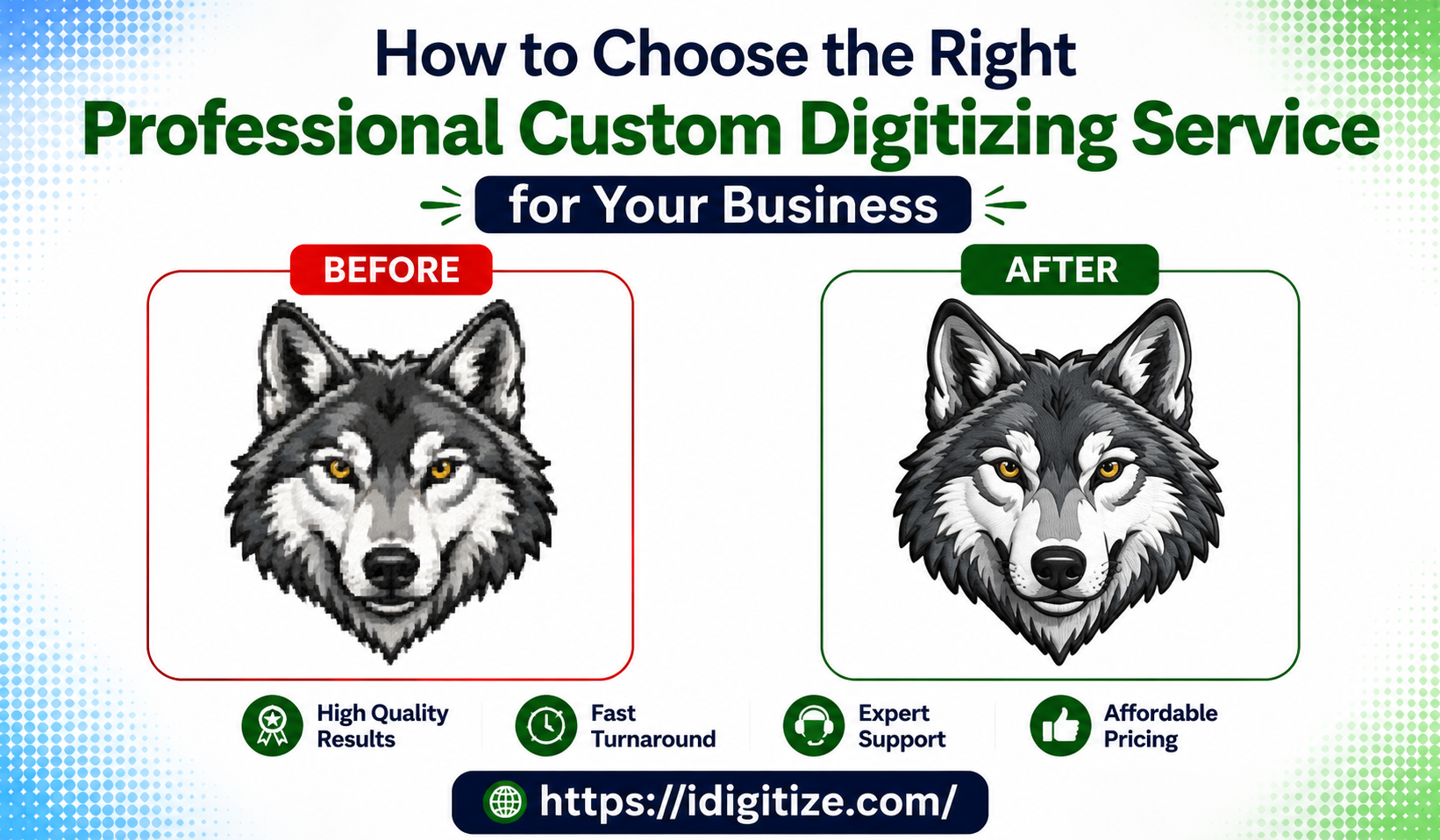
Choosing the right [professional custom digitizing](https://idigitize.com/) service can significantly impact the quality of your embroidered products. Whether you're creating branded uniforms, promotional merchandise, sports apparel, or corporate gifts, the quality of digitizing directly affects how your logo or design appears on fabric.
A reliable service provider helps ensure clean stitching, accurate details, and consistent results while reducing production errors and unnecessary costs.
## Why Choosing the Right Digitizing Service Matters
Many businesses focus on embroidery machines, garment quality, or thread colors but overlook the importance of the digitized file itself. Even the best embroidery equipment cannot compensate for poor digitizing.
A well-prepared embroidery file helps achieve:
* Cleaner stitch paths
* Better design accuracy
* Reduced thread breaks
* Faster production
* Professional-looking embroidery
When digitizing is done correctly, your logo maintains its appearance across different garments and promotional products.
## What Custom Digitizing Actually Includes
Before selecting a provider, it helps to understand what the service involves.
### Converting Artwork into Stitch Files
The process transforms logos, images, and artwork into machine-readable embroidery files that guide the stitching process.
### Adjusting for Fabric Types
Different materials require different stitch settings.
For example:
* Polo shirts
* Caps
* Jackets
* Towels
* Performance fabrics
Each material behaves differently during embroidery.
### Optimizing Stitch Density
Professional digitizers adjust stitch density to create clean embroidery while preventing puckering and excessive thread buildup.
## Key Factors to Consider When Choosing a Custom Digitizing Service
### Evaluate Their Portfolio
One of the easiest ways to assess quality is by reviewing previous work.
Look for:
* Sharp lettering
* Clean outlines
* Smooth curves
* Consistent stitch coverage
* Detailed embroidery samples
A strong portfolio demonstrates experience across various industries and design styles.
### Check Similar Projects
If your logo contains fine details or small text, ask for examples of comparable work.
This helps determine whether the provider can handle your specific requirements.
### Ask About Industry Experience
Experience often translates into better problem-solving and higher-quality results.
An experienced digitizer understands:
* Fabric behavior
* Stitch compensation
* Pull and push effects
* Production requirements
These factors can significantly influence the final embroidery outcome.
### Review Turnaround Times
Fast delivery is important, but quality should never be sacrificed for speed.
Ask questions such as:
* What is the standard turnaround time?
* Are rush services available?
* How are revisions handled?
Reliable providers communicate timelines clearly before beginning work.
### Understand Revision Policies
Even with clear instructions, adjustments may occasionally be necessary.
Look for providers that offer reasonable revision support, especially for:
* Size adjustments
* Minor design corrections
* Stitch optimization
Clear revision policies help avoid misunderstandings later.
## Questions to Ask Before Placing an Order
### Which File Formats Are Provided?
Different embroidery machines require different file formats.
Common formats include:
* DST
* PES
* EXP
* JEF
* VP3
Confirm compatibility before ordering.
### Do They Test Designs Before Delivery?
Quality-focused providers often perform test runs to identify potential issues before final delivery.
This additional step can prevent costly production mistakes.
### Can They Handle Complex Designs?
Some logos contain:
* Fine text
* Gradients
* Detailed artwork
* Multiple color changes
Ask how they approach challenging designs and what limitations may exist.
## Step-by-Step Guide to Selecting the Best Provider
### Step 1: Define Your Requirements
Determine:
* Design size
* Garment type
* Embroidery location
* Quantity needed
Clear requirements help providers deliver more accurate results.
### Step 2: Compare Multiple Providers
Don't choose based solely on price.
Compare:
* Experience
* Portfolio quality
* Communication
* Turnaround time
* Customer support
### Step 3: Request a Sample Review
If possible, review sample work before committing to larger projects.
This provides insight into actual embroidery quality.
### Step 4: Evaluate Communication
A professional provider should ask questions about your design rather than simply accepting the file and proceeding.
Good communication often leads to better outcomes.
### Step 5: Start with a Small Project
Testing a provider with a smaller order can help evaluate quality before larger investments.
## Real-World Business Applications
### Corporate Uniform Programs
Businesses often need logos embroidered consistently across hundreds of uniforms.
Proper digitizing helps maintain a professional appearance throughout the organization.
### Promotional Merchandise
Branded merchandise such as hats, bags, and jackets requires embroidery files that work across multiple products and materials.
### Sports Team Apparel
Sports organizations frequently use embroidery for team branding, sponsor logos, and apparel customization.
Accurate stitch files ensure logos remain clear and recognizable.
## Advantages and Potential Drawbacks
### Pros
#### Better Embroidery Quality
Professionally created files produce cleaner and more accurate stitching.
#### Improved Consistency
The same design can be used across various products with reliable results.
#### Reduced Production Issues
Proper file preparation minimizes machine errors and thread problems.
#### Enhanced Brand Image
Professional embroidery contributes to a stronger visual identity.
### Cons
#### Higher Initial Cost
Quality digitizing requires expertise and time.
#### Not Every Design Is Embroidery-Friendly
Some artwork may need simplification to achieve the best stitched results.
#### Quality Can Vary Between Providers
Experience and skill levels differ significantly across the industry.
## Common Mistakes Businesses Should Avoid
### Choosing Based Only on Price
The cheapest option often leads to poor embroidery quality and additional correction costs.
### Ignoring Portfolio Reviews
Failing to review previous work increases the risk of disappointing results.
### Providing Low-Quality Artwork
Clear source files help digitizers create more accurate embroidery files.
### Not Discussing Fabric Types
Different materials require different digitizing approaches.
### Skipping Test Samples
Large production runs should always be tested when possible.
## Expert Tips for Better Results
### Provide Vector Artwork When Available
Vector files help maintain design accuracy during preparation.
### Share Brand Guidelines
Include:
* Logo specifications
* Color references
* Size requirements
* Placement instructions
### Be Clear About End Use
Embroidery for hats differs significantly from embroidery for jackets or polos.
The more information you provide, the better the final result.
### Build a Long-Term Relationship
Working consistently with a trusted provider often leads to faster turnaround times and improved consistency across future projects.
## Conclusion
Selecting the right professional [custom digitizing service](https://idigitize.com/pages/embroidery-digitizing-services) is an important decision for any business that relies on embroidered branding. Quality digitizing affects everything from logo clarity and stitch accuracy to production efficiency and brand perception.
Rather than focusing only on cost, evaluate experience, communication, portfolio quality, revision policies, and technical expertise. Taking the time to choose the right provider can help ensure your embroidered products consistently represent your business in the best possible way.
**Author Note:** This article is based on professional embroidery and digitizing industry practices. Service offerings, pricing, turnaround times, and file requirements may vary between providers, so always verify details before placing an order.
## Frequently Asked Questions
### What is custom digitizing in embroidery?
Custom digitizing is the process of converting artwork into a stitch file that embroidery machines can read and sew onto fabric.
### Why is digitizing important for embroidery quality?
Digitizing controls stitch placement, density, direction, and overall design accuracy, directly impacting the final embroidered result.
### How do I know if a digitizing provider is experienced?
Review their portfolio, ask about industry experience, and request examples similar to your project.
### Can any logo be digitized for embroidery?
Most logos can be digitized, but some highly detailed designs may require adjustments for optimal embroidery results.
### Should I choose the cheapest digitizing service available?
Price should not be the only factor. Quality, experience, communication, and support are often more important for achieving professional results.